Orthopedic Surgery Santa Rosa
Orthopedic Surgery Santa Rosa Orthopedic Surgery Santa Rosa Orthopedic Surgery Santa Rosa
Orthopedic Surgery Santa Rosa
Orthopedic Surgery Santa RosaOrthopedic Surgery Santa RosaOrthopedic Surgery Santa Rosa

Elbow Procedures

Broken Elbow

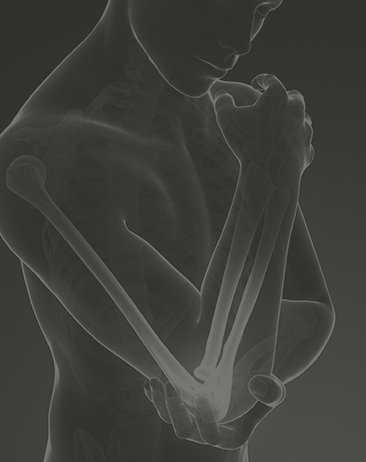
The elbow joint is composed of three bones: the ulna, radius, and humerus. When a person falls on their elbow or arm, fractures around the joint can occur. Elbow fractures are more common in children. They often occur after falls from the "monkey bars". The radial head is the most common bone that is fractured.

Many fractures of the elbow, especially fractures in children, are treated without surgery. A splint or cast and activity modifications are all that is needed for these fractures. However, when the fractured pieces are out of position (displaced), angulated (crooked), or involve a large portion of the joint surface, surgery is indicated.

» Contact us for more information on Broken Elbow

Cubital Tunnel Syndrome

Similar to carpal tunnel syndrome, cubital tunnel syndrome causes pain and numbness as a result of long-term nerve compression. In cubital tunnel syndrome, the ulnar nerve (the "funny bone" nerve) is affected as it passes through a narrow tunnel on the inside of the elbow. Irritation of the nerve may occur as a result of frequent bending of the elbow or simply from the natural anatomy of the elbow joint.

Patients with this condition often experience pain and numbness on the inside (small finger side) of the forearm and hand, especially after the elbow has been bent for a long period of time. Your doctor can diagnose this condition through a physical exam and nerve conduction tests.

Treatment for cubital tunnel syndrome may involve nighttime elbow splints, therapy, or lifestyle changes to relieve symptoms. For symptoms that do not respond to non-surgical methods, surgery may be needed to relieve pressure on the ulnar nerve.

» Contact us for more information on Cubital Tunnel Syndrome

Elbow Arthroscopy

Arthroscopy is a type of surgery that uses a small fiber-optic camera to visualize areas around a joint. Elbow arthroscopy involves making 4 to 6 small (1/4 inch) incisions around the elbow. Elbow arthroscopy allows the surgeon to work in the elbow joint while limiting the amount of dissection (cutting) needed to access the joint. Elbow arthroscopy can be used to help diagnose painful elbows, remove loose bodies in the joint, free up stiff elbows, and treat some forms of elbow arthritis. Elbow arthroscopy can also be used to help treat some elbow fractures. Essentially, elbow arthroscopy is a good tool to "clean up" the elbow joint.

» Contact us for more information on Elbow Arthroscopy

Golfer's Elbow

Medial epicondylitis, more commonly known as golfer's elbow, is a form of tendonitis that manifests on the inner side of the elbow. It is caused by the tendon in the forearm being stressed from constant use. Although it is known as golfer's elbow, it is more common in tennis players and pitchers.

Golfer's elbow is generally treated using anti-inflammatory medication, rest, and stretching. Occasionally, physical therapy is indicated. However, in rare cases pain symptoms will persist despite trials of these non-invasive treatments. In these situations, corticosteroid injections may be indicated. This treatment should be considered carefully because of the close proximity of the ulnar nerve to the affected area. Only in the most persistent cases is surgery indicated.

» Contact us for more information on Golfer's Elbow

Tennis Elbow

Tennis elbow, also known as lateral epicondylitis, is an elbow injury that occurs as a result of overuse of the wrist and forearm. The pain associated with this condition affects the outside of the elbow and can spread down the forearm to the top of the hand. Symptoms of tennis elbow include forearm weakness, pain with the wrist extended, pain with forearm rotation, and occasional tingling or burning in the forearm and hand.

Tennis elbow is usually diagnosed by a patient's history and physical exam. X-rays are only indicated when symptoms and exam findings are not typical. In many cases, tennis elbow heals on its own within two years. Initial pain can often be managed with rest, stretching, and changing wrist/arm lifting techniques. Cases that don't respond to stretching may require corticosteroid injections or physical therapy. Severe, persistent cases of tennis elbow may require surgery. However, surgery is only necessary for about 10% of those suffering from tennis elbow.

» Contact us for more information on Tennis Elbow

back to top

  • ROSA provides a full scope of orthopaedic services including:
  • Total joint replacement of the shoulder, elbow, hip, knee, and ankle
  • Open and arthroscopic shoulder, elbow, wrist, knee and ankle surgery
  • Upper extremity reconstruction and peripheral nerve surgery
  • Minimally invasive and reconstructive surgery of the cervical, thoracic, and lumbar spine
  • Evaluation and treatment of all sports-medicine related injuries, including knee, shoulder, elbow, wrist, hand, and ankle
  • State-of-the-art medical equipment including wireless, digital x-ray